Wednesday, April 20, 2016

Ultra Fiord 100: Wild, Tragic, Unforgettable

I’m sitting in a cafĂ©, drinking an Americano fuerte, in Puerto Natales, Chile. Seeing those words in front of me seems vaguely surreal…like I’ve stepped into someone else’s life. I mean, what regular person actually travels to the Chilean Antarctic to drink coffee and run a race? That kind of charmed life is for the athletic elites, sponsored writers, and those with six and seven figure paychecks. And yet, here I am, with the sore Achilles tendons and tight IT bands to prove it.

Following the epic adventure of the Bigfoot 200, racing internationally seemed the logical next step in my search for beautiful views and life’s limits. After reading Candice Burt’s report on the Ultra Fiord 100 (http://www.wilddefined.com/2015/04/on-becoming-conqueror-ultra-fiord-108-mi.html), in which the High Priestess of 200s labels it the “toughest, longest, and most dangerous race I have ever done,” the wild grounds of Patagonia started calling. Pennies saved, entry accepted, passport renewed, plane tickets and gear purchased, and enough Spanish reviewed to say “Hi, I’m a mountain runner and a vegetarian who eats fish. Where’s the bathroom. Thank you!” all that remained was to step into the unknown.

Amazing places and epic adventures offer great highs but also the deepest lows. The beauty is in feeling such a full spectrum of emotion, the entirety of your humanity, in such a short time. And so, Patagonia and the Ultra Fiord 100 qualifies as an amazing and epic adventure, because it certainly did not fail to provide a canvas for that spectrum. Here is our story, as told through many pictures and a few words.

       Embarrassment/Confusion: Traveling in another country is a good way to see how red you can turn while ordering a cup of coffee and having your credit card declined. Always be kind to people who don’t speak your language well. Actually, always be kind, but especially then. Being surrounded by another language teaches you to build confidence over time, but you always feel like you’re missing information. Information that may be critical to your survival when entering a treacherous mountain course in bad weather, or to your luggage getting to the right destination when switching from an international to domestic flight area.


Fortunately, there weren't many wrong options to order once I got past the airport's Dunkin Donuts.

       Curiosity: The plane ride from Santiago was one of the most beautiful I’ve ever experienced. The sky opened up to view massive lakes, white topped mountains, and glaciers. Like a child with nose glued to the window, I could only wonder at what was to come when I stood in this new land and not above it.


    Anticipation: Hurry up and wait was the early theme for our race. As the weather forecast worsened, we knew that the course would be modified, but had few details to offer friends and family until shortly before race start. We awoke on Thursday and each made their own plans for how to pass the time until loading onto shuttles at 10:00pm. Some tried to sleep, others ate as many small meals as possible, a mixture of nervous and excited chatter balanced against silent contemplation. Even after the buses were loaded, we drove to a small town and waited again for 40 minutes at a small general store. Joviality covered the tense air, with many videos and self-portraits taken to pass the time. The anticipation continued to build, however, and when the Chileans finished their "Chi-Chi-Chi! Le-le-le!" chant at the start line we shot off like a champagne cork into the night, seemingly heedless of the fact that we had nearly 100 miles to run.


Drop bag preparations for a yurt with eight runners somewhat resembles a tornado in a skittles factory.
Photo Credit: Jim Dees
What do you eat during an Ultra? All the food. 
Photo Credit: Jim Dees
Joy: Jim and I agreed that our two days spent hiking 55 kilometers of “The W” in Torres del Paine National Park were enough to make the trip to Patagonia worth the time, regardless of how our race went. We enjoyed brilliant weather, perfect avalanche views, and sunrises and sunsets that set the unique terrain on fire. Joy came during the race as we reached our high mountain pass, revealing a wild alpine field with enough wind and snow to remind you that you were alive and accomplishing something big. It came again on the long road into town as snow fell in clumps the size of silver dollars, causing me to stop and spin with my arms in the air. And finally, it came as a young race volunteer ran with me up the last hill into town, rain and sleet pouring down and obscuring all vision but his blue coat in front of me.


 Fear: I say frequently that the only way to grow is to embrace fear. That does not mean ignoring it or pushing it aside, but accepting it and denying it control over your actions. Fear of failure. Fear of many people in tight spaces. Fear of a wild course with a weather forecast so violent that the route must be modified. Fear of falling down the side of a mountain in all that endless mud. Fear of predator eyes in the headlamp glow. Fear that if you lay down to sleep you will be too cold to wake up. Runners are not fearless; in fact, sometimes I think we are more aware of our fears than others. It is simply that we live alongside those fears instead of trying to avoid them at the cost of feeling less alive.

Aid station along the exposed glacier flat crossing. Photo Credit: Jim Dees
     Exhaustion: The biggest battle in the Ultra Fiord, even more than the thigh deep mud, 35 mph winds, sleet, snow, rain, river crossings, exposed mountain crossings, and treacherous climbs/descents, is simple exhaustion. The race starts at midnight and guarantees that you will go through parts of at least two nights. For me, that meant waking at 7:00 on Thursday morning, unsuccessfully attempting a mid-afternoon nap, and finally meeting my bed again around 1:30 on Saturday afternoon. You start the race tired, you finish exhausted. It’s still possible to move very efficiently, if not so quickly, when injured. When exhausted, though, your pace crawls and even the most determined minds eventually crack.

Course Photo: Jim Dees

Course Photo: Jim Dees

       Pride: While I can’t say that I felt joy for long after finishing the race in 36 hours and 48 minutes, due to the immediate and tragic news of a then unidentified fallen runner, there is always pride that comes with surviving a test of will with good humor and determination. As always, I am proud to say that I am part of a community that builds up the best in each other. And finally, I was pretty proud of my ability to order coffee and pay appropriately in Spanish without saying “I’m sorry” by the time it came to depart. Sometimes you have to appreciate the small goals.

7th Female Award, 3rd Age Group, and Finisher Medal.

    Sorrow: Perhaps the most potent and unexpected emotion for this adventure. The loss of our friend and fellow runner, Arturo Hector Martinez Rueda to hypothermia approximately 65 kilometers into the 100-mile route, and less than two miles from an aid station was a crushing blow to all who had the blessing of spending time with this kind and special man. His spirit truly embodies all the great potential of the human species. I wish I could share some of the pictures we took together in our bunks, with his "Leoncito", and at the race start, but they may be forever lost with him.


Anger: Anger is a rare emotion for me. I tend to move quickly to resignation and acceptance of a situation instead of wasting energy on passionate discourse. When the race failed to recognize my finish in time for the awards ceremony (8 hours later), however, I was angry. When the organization gave us mixed reports over and over about Arturo’s condition and whereabouts, I was angry. When I waited at one location for two hours for someone to come to fix the results, only to be told that I should walk across town, I was angry enough to be in tears. You should not constantly wonder whether your friend is alive or not. You should not have to wonder what the race organization is doing. You should not have to present your medal and prove that you finished a course in the freezing sleet, be told that it had been recorded manually even if the electronic timer had failed, then sit in the stands as the only female athlete not recognized for surviving 36 hours of extreme conditions.


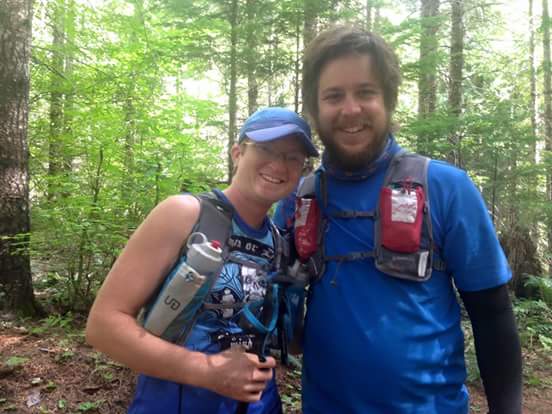
   Love/Togetherness/Friendship: For someone who typically runs alone, I am continuously more blessed by my companions and world running community. We are bound by a love for the mountains, the challenge, and the identification of our “true” selves in a way that transcends language barriers. Jim, my fellow Bigfoot 200 finisher, provided steady companionship throughout the days leading up to and following the race. We shared stories and meals with German, Irish, and American hiking friends while in Torres del Paine National Park. There was Arturo, a 100-mile runner from Mexico, who shared our yurt and gave me hours of laughter and conversation that eased my nerves before the race start. Yitka, who shared the first hour of the course with me before going on to a win and sub 24-hour finish. Steve and Harry, who kept a great rhythm in the dark morning hours of our first 50k. Andrea, who yo-yoed back and forth with me across the grueling middle section and patiently translated for my weary brain when aid workers gave information. The 70k Chilean runner who kept conversation flowing and stayed with me for 6 kilometers on the second night so I wouldn’t fall asleep on my feet, even with his own finish line so close, and assured me that I had helped him just as much when I tried to offer my profuse and nearly incoherent thanks. Gaby, the aid station worker who not only made special effort during the race to always give a smile and reassurance but helped time and again after the race to translate information and get my official finish recognition. Adrian, our fabulous and compassionate host at Domos House (www.domoshouse.com), who worked tirelessly to find our more information about our fallen runner and planned a traditional celebration meal for us after the finish. And yes, even the Japanese film crew who met me for a small part of each segment…they offered me something to look for and a reason to wake up and increase my pace to the finish. 

Jim, Arturo, and Oscar just before loading the buses to the start. Photo Credit: Jim Dees
Our "yurt-mates" at the fabulous Domos House in Puerto Natales. Photo Credit: Adrian Rubio


Japanese documentary crew doing interviews in Tucson.
These intrepid folks actually made it out to every segment of the course for the sake of their film.


   And so, in close, instead of summarizing a race or breaking down what should have been done differently, I ask you to treat every conversation as though you have one day to impact them. Sometimes one conversation, one smile is enough to change a person's life forever. Run free and happy trails, Arturo!

Wednesday, March 30, 2016

Chasing Down Bigfoot: The Final Chapter

Entering the track with Jim Julian
Photo Credit: Samantha de la Vega
Water refilled, I thanked them and waved goodbye in the pre-dawn glow. Jim hiked back up with me, apologizing that he couldn't join me for the rest of the trek. Thirty minutes up the trail, the GI purge continued, and would at 15-30 minute intervals for the rest of the course. Jim bid me farewell when we met up with Susan and Reed on their own descent into the aid station. Though the company had kept me awake, I was glad to be alone with the consequences of my dietary indiscretions.


Over the next few miles, the sun rose to reveal a beautiful meadow in the midst of a comparatively mild climb to the final summit. Now out of danger of being pulled in the last stretch, I let the exhaustion sink in and allowed myself the luxury of a fifteen minute nap in the pink glow along the trail, breathing in the fresh air and wishing I could smell the wildflowers around me.


Finish line with
Photo Credit: Samantha de la Vega
The last peak summit soon followed and from there it was a downhill obstacle course of fallen trees. You think it's hard to navigate a log or two at the end of a 50K? Try out 50 or 100 after 180 miles. Honestly though, the debris didn't bother me so much, as it kept me awake and gave me a reason to focus on something other than my injury or exhaustion. The real trouble began when the "easy" part started. The trail petered out to a forest road and I watched as a horrified bystander as my bowels, temperature regulation, and ability to stay awake all seemed to revolt at once. I'd overhead, get chills, squat to feel my now empty stomach and intestines cramp, force myself to hobble faster to a given point, and slap myself awake when I had been still too long. The distance crawled by and I couldn't believe the final aid station hadn't appeared. All I wanted was to reach that aid station...because I knew my drop bag had wet wipes. Yep, wet wipes were my number one desire at that moment, which is saying something for someone who loves beer and ice cream and sleep as much as I do.

Photo Credit: Howie Stern
At last, the mostly cleared picnic table appeared and I barely looked at the two volunteers as they informed me that the official cutoff had passed a few minutes ago. I left with my precious cargo and a wave for the final stretch into town.

Once my feet hit pavement a new rhythm began. Shuffle until you have to walk. Walk until you have to stop. Stretch out against the poles. Fall asleep in that position. Wake yourself up. Repeat. It sounds awful, but the time was almost peaceful. Thanks to the wet wipes, my shorts were no longer so uncomfortable and the chills/sweats had abated. This segment did contain one very lucid hallucination of the road being blocked by a herd of cattle, but I knew that imaginary or real cows couldn't pull me from the race, so they didn't worry me.

Photo Credit: Jerry Gamez
A few miles from the end, a vehicle stopped on the shoulder and I knew before seeing him that Jim Julian would be inside. Sure enough, he got out and started walking. Less than a mile later, the head medic, Nick, dropped off another pacer named Peggy and together we marched on. I remembered seeing Peggy at the pre-race meeting some days before and thinking that she looked like the type of person I wanted to be friends with. In my haze of exhaustion, I think I forgot that we weren't actually friends at all, but I can tell you that my gut instinct was right. With the two of them sharing stories and buffering my path from passing cars, I no longer had to take stopping breaks until the last half mile. In response to the pavement, my feet began to swell inside the shoes to the point where it felt like walking on pillows that stab your soles. I listened as they talked about building things, Brazilian Jiu-Jitsu, and home cooking, reveling in the realization that I could let these people be with me and support me without shame or guilt. It was joyous and humbling and made me more than anything wish to give back and support someone else on an epic journey.

Photo Credit: Jerry Gamez
The high school track finally appeared and Peggy asked if I wanted a beer at the finish. She ran off to fetch it and declined the hug and thanks I tried to offer...not until the finish line, she admonished. Soon, Jim left me too, and the music played as I "danced" and "jogged" around the track with Little Foot close behind.

What seemed like an army of people cheered and made a tunnel at the finish, Candice at the front and Peggy waiting with the promised beer at the end. It was over, I was the final finisher (DFL) following roughly 105 hours on course, and I had never felt so proud and part of something great in any time I'd walked away from a race with a podium finish. I had found the people, the adventure, the limit I had looked for since starting to run not so many years ago.


Finish line with Tina Ure
Photo Credit: Jerry Gamez

Epilogue: Time doesn't stop at the finish line, though it sometimes feels like it should. Becoming re-acclimated to "real" time took a bit longer than expected...leading to a missed flight and my friends again coming through to save the day. It pays to have friends with connections at airlines and ones who will literally give you the shoes off their feet when you can't find yours at the airport (thanks, Ryan and Trey!). You also sacrifice time with injury, which is why it must be a personal choice to continue with unknown consequences. For those who want to know, it took about two weeks to not have constant foot and ankle edema and a whopping eight weeks to have close to full range of motion in my left ankle/foot again. It still has a big knot of scar tissue at the foot to ankle junction that is likely to be a permanent change in my anatomy.

The elevation profile from all those peaks and valleys also made a permanent physical change in the form of a tattoo that spans my upper back, so more than scars and pictures remind me of the lessons learned and stories gained on a daily basis.

By far what I think about most when I look back at the four days of the Bigfoot 200 is joy and gratitude. The awe of beauty at the edge of reason and limit, mixed with the fierce desire to give back. Thank you for being a part of my story and allowing me to be a part of yours.

Happy Trails!

Friday, March 18, 2016

Chasing Down Bigfoot: The Beginning of the End

I followed Jim Dees' (also known as Darkling Thrush) dulcet tones through the woods for some time, straining to hear until they faded into the distant sound of running water, breeze through the trees, soft tread of my fresh shoes on the pine needle floor, and rhythmic click of poles.

Warned that there was a long climb ahead, I drank and washed my face in the winding river tributary. The climb was long, but not terribly steep in my now time adjusted memory. It leveled out high on a panoramic view just before sunset. To get a better view, I climbed a little higher off course for a picture, turned on my headlamp, and said "hello" to another night. This night blurred in and out of focus, punctuated by the sudden development of nose bleeds (a new life experience) and the need to watch out for cars on a network of forest roads.

For once, the aid station appeared earlier than I expected! Following my "feet up, eat, get going" plan, I chatted with the one conscious aid station worker and stuffed my nostrils with paper towel wads until the dripping stopped. It was a short distance to the next station and next planned sleep opportunity, so my mood was great. In fact, I had decided since midway through my time with Cody that I would be in a great mood for the duration of this time on course...whether time ran out, regardless of pain or weather...that I didn't deserve to be on this trail if I couldn't smile or feel the joy of it.

One of the questions I sometimes get is "how do you run safely on the trails after dark?" I have to say that when you're sleep deprived, it's actually far more dangerous running in the dark on roads. The trails keep you interested and awake(ish) and give you borders. It's something like bumper bowling...you may not roll a strike, but at least you're not ending up in someone else's lane. Moon lit forest roads, on the other hand, turn you into a ping pong ball that bounces from side to side across the road until a car comes and encourages your sense of self-preservation to kick in.

I learned an important lesson at the Chain Lakes station. Bad sleep can actually make you more tired than shuffling around in the dark. My mattress choice was a poor one, so I ended up on a deflated rubber mat in a frozen daze 90 minutes later. Temperature regulation goes out the window when you sweat a lot and don't sleep enough. Phases that felt like too much tequila, followed by teeth chattering like a Christmas movie, eventually resulted in a return to decision making ability. Enough coffee could revive the dead, I think. More coherent, I noticed Allie's van and was delighted to get a fresh set of batteries for the final night, as well as my own resupply fuel options.

About a mile back on course, it hit me how much energy I had used getting warm again. I was exhausted. A tree crashed in the woods and I imagined what it would be like to be squished by a brontosaurus... Then promptly fell asleep on a log in the warm glow of the morning sun. Fifteen to twenty minute power naps in the sun do more than 90 minutes of frozen dozing. Lesson learned.

No longer worried about dinosaurs, the trail spun down a winding track. It was hard to find a rhythm, though because my temperature regulation still wasn't cooperating. One minute, I'd be sweating profusely like a menopausal hot flash. The next, I had chills and goosebumps. After hours alone, I heard chatting behind me. An older competitor, Reed, and his pacer caught up and I used their rhythm and conversation to revive my own forward movement. Just a bit of human contact was enough to clear the cobwebs and I suddenly felt strong power hiking back up all the elevation we had lost early in the segment. Together we hiked up to the expansive view of Elk Peak, then scooted down to the third to last aid station, just ahead of an ominous mountain storm.

At Klickatat, I felt awake and finally ready to get going on finishing this course. Kent "Bull" Dozier, another ultra distance legend, came p to discuss the weather report, a lost runner, and his and Phil Nimmo's decision to drop due to foot issues. While sad for their shortened adventure, this knowledge armed me with additional motivation. No matter how slow it was, I could smell the finish line and had a plan to get there. I had been right not to quit all those miles ago.

Storm subsided, I followed Reed and his new pacer (his lovely wife, Susan) into our last sunset. This part of the course had been reverently dubbed the "Bigfoot Game Trail," and it quickly lived up to its name. It wound across the side of slippery, gravel strewn cliffs...no longer single track, but a choose your path of lease resistance and hope that it led you to the next marker. Reed and Susan had gone ahead during a downhill portion, so I crawled and slid and marched and scrambled alone, watching the cutoff grow closer, knowing I couldn't go faster and I had no room for error. Later, I heard many people talk about time spent lost in this section...one for over 18 hours, another who slept overnight on the ground with her pacer after becoming confused and sliding partially down an embankment. Why didn't I lose the trail? I think it's probably because I was no longer willing to second guess anything, because it would break my concentration. I willed the next marker to appear, because I had no time to turn around and add superfluous steps.

The single track finally reappeared and my best guess of distance left me with a good chance to make the Twin Lakes cutoff with about ten minutes to spare. Suddenly, I saw a headlamp coming toward me, then turn back around. The mumbling I heard sounded like Reed, but Susan wasn't in sight. As I got closer, he said something confused and incoherent, looking ten years older than when I had last seen him seven or eight hours before. Fortunately, Susan appeared up ahead, and I felt a stab of guilt as I passed, knowing that his race had come to an end.


Not far past them, I made a left turn onto a trail that I though marked about three miles to the station. Forty five minutes to cut off...tight, but I could get it done. Then, my heart sunk and unexpected panic began when a sign appeared thirteen minutes later. THREE MILES TO GO. I hadn't put together a ten minute mile in over 100 miles! I was going to get cut with less than a marathon to go and more than twelve hours to complete it in.

Not caring the consequences, I literally hauled myself down the trail, throwing my poles in front of me and launching forward with my upper body strength, letting my feet find any landing place possible. It was reckless, stupid, but I wanted to arrive at the station having given everything if this was my end. I would go out fighting. Five minutes, four, three, two... the aid station lights were visible, but I wasn't going to make it. An exodus of my friends...Jim Dees, Stephen Jones, and others who had become friends simply because we were on the same journey...came from the station toward me and cheered that I was still going, even as my heart was breaking.
Twin Lakes Aid Workers-Photo Credit: Jerry Gamez

At the end of them was a man I didn't recognize. He pulled off trail and followed behind me, telling me to walk instead of continuing my awkward pole vaulting gait. He introduced himself as Jim Julian. He'd paced the first place woman (Gia Madole) and was now working the aid station. He was sure that Craig would let me keep going. My panic only slightly abated and Jim received about half of my attention as he rambled on about all the things this aid station lead had done that made him a regular bad ass. All I cared about was the fact that this one person was in control of when my race would end.

Five minutes after the official cut off, I came into the Twin Lakes aid station. Craig Longobardi took one look at me and said I was good to go, but that I couldn't sleep. The workers commented on how coherent I was...being an emergency veterinarian makes you a very good actor when tired. (I probably shouldn't admit how easy it is to convince someone to let you make life and death decisions when sleep deprived.)

Photo Credit: Jerry Gamez
Since they couldn't offer sleep, I think I became Craig and Jim's project to get to the end, so they were going to feed me. Halfway though the second plate, laden with every vegetarian option available, I realized that they may have killed me with kindness. Midway through a bite of artichoke dip, I felt the gastrointestinal rebellion and barely made it to the porta-potty before the diarrhea began.

Yep...I'm going to leave you with diarrhea before I finally wrap up this Bigfoot story. Somehow, it seems appropriate. Sorry, not sorry.

Sunday, January 3, 2016

Chasing Down Bigfoot: The Middle Miles

Darkness fell on the next segment. Riding the emotional high of the sunset and physical energy boost of a warm meal, I ran the entirety of the comparatively short (8 miles) and downhill segment to the first available sleep station. Very shortly, this would be a nearly race ending decision in hindsight...but at the time, it felt good to trot along with gravity on my side, listening to the chatter of the folks behind me.

Opting to keep moving though the next long and technical chunk of trail in the cool of night, I used the station to eat another meal and have some preventative foot care on a hot spot under my big toe. Before leaving the station, I excitedly grabbed a piece of black olive and pineapple pizza, hardly believing my good fortune as this is my favorite pizza topping combination, only to discover quickly that jalapenos camouflage as olives when illuminated by head lamp. Ouch.

A runner who I came in with agreed that we should take on the next segment together, so I headed out slowly into the night and waited to hear Todd's footsteps behind me. My left shoe felt tight and twinges of discomfort spread occasionally across the top of my foot and ankle. Loosening the shoe seemed to help a little, but I made a mental note to change shoes at the next opportunity. Todd rejoined me just before we began climbing to the highest point of the race. Though we kept enjoyable conversation about our lives and goals for the course, the climbing was steep and slick with false summit after false summit. The moon occasionally reflected off of water below so brightly that we confused it for headlamps in the distance. Though this is typically the type of terrain I enjoy, each small downhill became more uncomfortable, until I had to admit that something was seriously wrong with my left foot. By morning, we reached Mount Margaret, watching the dawn break over a pair of lakes and looking back at Mount Saint Helens. What should have been an easy jog down into the aid station was an excruciating, nauseating experience.

From Bigfoot 200 Endurance Run Facebook Page
 I arrived in a painful fog, about an hour past our goal for the segment, thankful for Todd's willingness to stay with me when my downhill pace started to resemble a disjointed shuffle. My GPS watch died not far from the station, but I no longer cared, fairly certain that my race would not last much longer.

I love aid station workers. The slower I go, the more I appreciate them. When I race for a placing, I tend to be so focused that I miss not only the people, but the drop bags and even stations themselves. People ask me after the finish what I though to the "amazing X at aid station Y" and I respond with a confused "they had that?!" Each time I race a longer distance or with a new injury, I hear more stories, see more people, and have the opportunity to thank more volunteers. This makes every pace enjoyable and, beyond the stunning views of the mountain runs, is a reason to keep competing regardless of imperfect training or circumstances.

I feel the need to proclaim this admiration before stating that this was the worst aid station experience I've ever had. Perhaps it only ended up that way because everything else was so well organized and I saw the experience through the eyes of hunger, cold, exhaustion, personal disappointment, and pain. Regardless, I had to find someone to check me in and much time was wasted while I sat in a dazed stupor in a wet hair until a fellow runner who was injured and dropping out of the race offered me some trail mix. There was no coffee, no warm food, no one to fill water packs and prod and poke me in the right direction to restart the journey. Over an hour of empty time. I finally crawled out of my stupor, refilled my bottles, and was offered some ibuprofen by Todd's wife...possibly my two people at the moment. As I wandered slowly to the bathroom, Luis (my fellow Tucson runner) came in and I confessed to him that I wasn't sure that I would be continuing much past the 100 mile mark.

The next segment was mental and physical agony. I watched many people pass without hope of catching or keeping up. Had it not been for Cody waiting at the next station, my race would have ended at Mile 75. The thought of hobbling for over 100 miles when I already felt this bad was just not tenable. Hiking 35 miles with a companion who had slept in his car so he wouldn't miss me coming in? Painful, but doable. I certainly had enough time to spare!

Before I get into Cody's segment of my Bigfoot journey, I should admit that I am a terrible person to pace. I love team sports, but endurance is a solo thing for me and even the most lovable people just seem to distract me from where I need to be in order to have my best race. I envy people who laugh and get energy from their pacers, joking the night away. I just leave mine at aid stations... My dear friend Shawn made me promise to be nice when he heard that a mutual friend had agreed to pace double the distance I had ever run with another person. How did Cody get himself into this mess, you ask? We didn't even actually run together when we lived in the same state! Truth be told, his name popped up with a "moved to Washington, the trails are great" Facebook status on a day when I was in the midst of an "oh my God, what am I doing and why am I doing it with no crew???" moment. I shot him a message and next thing I knew, I had a pacer and no clue what to do with him. You have to know all of this, because now I'm going to tell you why Cody almost single handedly saved my race and why I would travel anywhere in the world to pace for him.

Photo Credit: Cody Cunningham
Back to the Bigfoot. By the time I got to Elk Pass, the sun had burned off the chilly fog and had marginally improved my spirits, if not my pace. Cody and the aid station crew met me with infectious smiles, offers of quesadillas and ice cream (I accepted the first, not the latter, remarkably), and a covered place to sit and ice my foot and ankle. The medical team lead, Nick, wrapped me up and agreed that it was a painful but not unstable injury. I could continue forward as long as I wanted. And by now, I definitely wasn't ready to throw in the towel. I'd at least get a new distance PR out of this! Aid station magic at it's best.

Photo Credit: Cody Cunningham
Thanks to the wrap and time off my feet, I found it possible to shuffle the rare flat portions and more efficiently hike the ups and downs at a steady 2.5-3mph average. It's not racing, but it was more than enough for Cody to realize that I could finish if I just kept moving. So we began a new trend between stations: start off strong and happy, if not fast; develop shooting pains as the inflammation increased halfway to the next station; laugh and joke between long silent pauses and hyperventilating at the top of each hill in preparation for the descent; drag into the next station with gritted teeth; sit down, eat smile; repeat. What made Cody so remarkable as a pacer for me, I think, is that he never questioned the rhythm. He allowed the silences to be painful without trying to "help." He understood that there's a time to laugh at the pain and a time to just be. That, above all else, this was still my happy place. He understood because it was his, too, and no matter how tired he was or cold from the rain, there was always a "kid in a candy store" grin behind his eyes.

In our three segments together, I slept for the first time and awoke to steady rain in the dark, we climbed rutted and rooted double track that was determined to break quads of ankles, a drop bag disappeared, I had a mild panic attack that we'd somehow missed a turn after not seeing a marker for nearly a mile, and we enjoyed a beautiful six miles along the Lewis river, complete with waterfalls.

Photo Credit: Jerry Gamez
We parted ways at the Lewis river aid station, roughly 125 miles into the course. The well stocked station met us with grins, flamingos, and time and space for more sleep. When I woke from my two hour respite, I was ecstatic to find new socks, shoes, and batteries waiting for me. Cody had tracked down Allie's van and brought them back as his last vote of confidence that I would be moving on just fine on my own.  Fed, rested, and rebandaged, I bed the flamingo and his crew goodbye with a wave of my trekking pole. (Ok, maybe my aim was a little off the fist time...two waves of the trekking pole)


Photo Credit: Jerry Gamez


Thursday, December 10, 2015

Chasing Down Bigfoot: Day 1...ish

The wide double track allowed us to space out in pods, all moving at a brisk hike or slow trot. I listened quietly to the Tahoe veterans, trying to learn by osmosis how to finish a 200 mile foot race. This race still didn't feel like mine, so I would have to create it along the way.


Photo Credit: Ross Comer
Quite suddenly, the trees ended and opened up into a wide expanse of talus boulders, a veritable playground of ankle-twisting cooled lava creations strung together with fence posts and flags to mark the general direction of the "trail." To call this section technical is an understatement, though it could have been more challenging if straight up hill in the dark on ice while chased by an actual Bigfoot. Without a doubt, this was an adventure, not a race, not even a run. After two large talus field crossings, we enjoyed a flowing downhill reprieve into the first aid station. Our line got caught in the beauty and easy trails, allowing ourselves to run faster and stretch through the switchbacks, just slow enough to continue conversation. The purple tank top and multi-colored shorts in front of me belonged to a woman named Tina. She was a finisher...Tahoe 200...Hardrock 100 (x4)...and about seventy other endurance trail races in the past fifteen years. Beyond that, she had a perfect record as a pacer, always getting her athletes to the finish line in time and in one piece. Listening to her stories, I heard my father's advice in my head. Emulate, Kate, emulate. 


Eating at the first aid station, it was a surreal moment when Candice, a living legend in my house since her record breaking Wonderland Trail adventure in September 2012 (check out her stories at wilddefined.com), asked how I liked her course so far and whether I needed any ice. "It only gets better," she promised, after I gushed about the technical and panoramic beauty of the first 12.5 miles. My mind was also eased as Allie, the other Tucson runner's fiance, met me with a grin and assured me that Luis had made it on the trail and I'd see her for refueling as planned.


So began our first long segment, a soul testing finish to the "warmup" 50K. It skirted much of the way around Mount Saint Helens, along the Lewitt trail, across rivers, up and down scree slopes with the help of a belay rope, and mile after mile of punishingly slick ash that saw me on my seat (sometimes voluntarily) more than once. This segment was hard, so early in the race, because of the forced slow going for everyone, ash-induced blisters for some, and my own personal fears about sliding. Where some embrace the uncontrolled downhill scramble, others of us put on the brakes as we lose more and more control. Physically, that doesn't really help, and unfortunately, the early stress of overuse of these "brakes" under the volcanic base would haunt me for many miles in the not-so-distant future.

Photo Credit: Ross Comer


I arrived at mile 32 to a hike-in aid station out of water, starving, and well behind any 50K pace I had ever run. That segment broke us in, for most, or merely broke us, for a few others. I remember smiling briefly as another competitor complained about the hot and dry of the ash crossing of the dead zone...not compared to the Tucson deserts this summer, was all I could think in reply. In a way, that section and the complaints were a comfort. Perhaps my training, though less than ideal for the scope of this adventure, had really just been for this one small piece of the race.

The next segment was my first completely alone. At first, it felt hard to move forward out of the ash, but as the trail climbed up Johnson Ridge and the sun began to turn the mountains a brilliant orange, I was filled with a combination of joyous energy and nearly tearful sadness that the impending darkness would block my view of the scenery. This same combination of primal joy and sorrow greeted me at each subsequent sunset. I laughed for no reason, running along the ridge to the observatory, passing "Very Dangerous" trail warning signs on feet that felt almost light. Veggie burgers with homemade guacamole rarely taste so good as when you're sitting in a camp chair with freshly cleaned feet, new socks, and a top of the world view before heading out in the very last ways of darkness.


Friday, November 20, 2015

Chasing down Bigfoot: Prologue

Writing about my Bigfoot 200 experience is a little like cleaning house. Look at any flat surface and you'd think I needed to relearn the definition of "organization." Open a drawer, however, and you'll see everything in perfect and repeatable order. Look in my closet, and you'll see every piece of clothing arranged by type and time of year it's to be used. Take a gander at the shelves, and you'll find the DVDs in alphabetical order and the books arranged by genre and author name. It's not that I don't like things to be in order (or at least that's what I would explain to my mother), it's that things are either put away or they aren't...no half way, no in between...and so things build up until I'm ready to put everything away the right way. And so it is with Bigfoot. I feel a responsibility to either write about it "right" or not at all...and since I work a full time job and happen to have a rather time consuming set of active, living in the moment hobbies, reliving it for you all at once may never happen. Instead, please bear with me as I follow the advice of those who excel in keeping a tidy house: Break it down into manageable pieces and the task won't seem so big. If I were creative and had it all written out to dispense in teaser bits, I'd start with Part 3 or something, just to make you all confused, yet engaged in true George Lucas style. Alas, I am not...and Star Wars did that better than I would have anyway. So, welcome to Part Zero. 

The magnitude of the Bigfoot 200 experience makes it hard to sit and write about. There isn't one single lesson learned. There isn't one single dominating feeling, though at the end all those emotions briefly faded in comparison to the joy of crossing the finish line. Most of all, it does not feel at all like the solo effort that races in the past have been at their core. 

This part of the story begins at the airport in Tucson, where thankfully I made it through two rounds of security with my expired temporary driver's license and birth certificate. From there, I took a plane to a train to a bus (Dr. Seuss would be so proud), to spend the next two days with my buddies Trey and Ryan in Issaquah, Washington. Within a few hours, I found myself caught up on all the Uphill Running gossip from my three month absence and in possession of 2.5 new pairs of shoes for the race. When you plan to be on your feet for four days straight, traditional rules for breaking in equipment tends to go out the window. Also, for anyone who hasn't been vertical for that many consecutive steps, gravity and the rules of circulation make things like feet swell over time. Why the half pair? Trey was kind enough to send me with an extra extra pair on loan, just in case. If you're ever in Issaquah, do yourself a favor and stop by the Uphill Running shop. Tell them Kate sent you, and they'll probably offer you a beer...or just be share your story and have a conversation and they'll probably offer you a beer anyway.

The next day, I hijacked Ryan and his car in return for a breakfast stop on our way to Monroe to pick up a car from my wonderful friends and former landlord/lady (is landpeople a thing?), Alan and Heidi. You may be able to get through airport security with an expired temporary license, but companies frown on renting you a vehicle. Grocery shopping done, bean burritos made, further visiting had. To add some functional component to the remaining day at my favorite bachelor pad, I cleaned the inappropriately green fuzzy things out of the fridge and made enough French toast, scrambled eggs, and sweet potato hash to feed a small army...because, let's be honest, that's the real way to show love to a bunch of people who run up mountains for fun. Before leaving, I promised Trey I'd share a beer with him as soon as I got done, however many miles I ended up completing, whatever time of day or night. His return threat to only partake if I crossed the finish line was probably an empty one, but I'm only a little embarrassed to admit how much it motivated me to keep putting one foot in front of there other in the coming days when I couldn't come up with many other reasons to do so. 
 Thursday afternoon was filled with race meetings in the little town of Randle at the White Pass High School. A pit opened in my stomach as soon as I parked the car, which only got bigger as I fumbled through my drop bags and cheerfully asked the pink trucker's hat wearing gentleman (Yes, Phil, you get to be a gentleman for my story) next to me, "Any second thoughts?"

"Nope, I just finished Badwater and the Colorado 200 last month. My feet are a little sore, but it should be a good time."

Oh...shit. I'm in a place where even the normal looking people are actually running gods. 

It's a good thing my response to fear is to become very quiet and still whilst considering my options, because otherwise I might have started running then...to a dark place to hide and say "Just Kidding!!" when asked about the concept of running 200 miles. Instead, I coerced my facial muscles to produce some vague form of smile or grimace by the time the pink hat turned back around. Then, all real prep work done, finding food to put in that ever growing pit seemed like the only reasonable task to keep from pacing in circles all night. Yep, food's a pretty big theme in my life. When in doubt, eat. Forty driving miles later, I was back at the campsite in possession of my Last Meal: a Subway egg sandwich and a bag of yogurt covered pretzels.

Nothing left to do, staring blankly at the Runner's Manual, I started writing down aid station distances and cut off times on my left forearm in permanent marker. I don't typically carry course descriptions, or even read them in detail before a race...something about taking the magic out of the exploration, I guess, but looking down at them, the task seemed just barely manageable. It reminded me of a chance remark from my first 50 mile race in December 2012. Trish turned to look at me as she paced the last fourteen miles of the course and said "you know, it's really amazing that even when you're coming off an injury or things don't go as you planned, you never have to worry about cut off times."


 Though I'd set up a tent, my anxiety of missing the early morning bus ride to the start had me trade a cramped position in the borrowed car for access to a cell phone charger for a fitful night of almost sleep, dressed in everything but my bib number (#73) for the next day.

Morning came, as it has a habit of doing, so cold compared to my desert training ground that it was hard to move in spite of my refreshed nerves. We boarded the school bus and began the winding drive to the start line. Conversation ranged from silent contemplation to booming and enthusiastic discourse of adventures past. The handful of 200 mile veterans were a welcome and stolid presence as well all wondered what the inaugural course would bring. The statistics alone set the Bigfoot 200 apart from all but the very most super human foot races, yet here we were, a bunch of very human folks without the benefit of morning coffee, ready to make an attempt.

At the Marble Mountain Sno-Park, we unloaded and dove at the provided spread of food and coffee (!!) with vigor that nearly matched the race's namesake. Resigned excitement began to join the knot of nerves in my abdomen...at least I had enough time to use the restroom before the starting gun, right?

"Luis Leon, please come check in!" Called Candice, the Race Director and living legend in my household for the past three years, naming the other Tucson runner.

No Luis meant no Allie (his lovely fiance who had graciously agreed to move some of my spare equipment between aid stations to lessen my self-crewed burden), so I said goodbye to my sunscreen and bottle of contraband ibuprofen, leaving the backpack I'd hoped to send with her with the pile of things to return to the finish. It was too late to worry whether I'd see the other resupply items (shoes, batteries, spare food, etc.) I'd left in her care. I'd simply have to adjust to whatever happened. Now that we were in the final countdown stages, it was all just part of the race experience.

Pictures taken, we counted down the ten seconds to "Go!" and trotted leisurely to the double track entrance of our Mount Saint Helens partial circumnavigation through a chorus of cheers and GPS watch beeps. A hairy fellow with large feet chased us out with a growl and a wave. Now, it was just a matter of one foot in front of the other. This was what we did. We were home.